

Dry well and downspout drainage in New Jersey
A dry well gives collected roof or drain water a place to soak into the ground. It only works where the soil can take the water, so we check the ground first and tell you straight if it will not work.
A dry well, also called a seepage pit, collects water from a downspout or drain line and lets it soak into the ground. It fits where there is no good place to run a pipe to daylight and the soil drains. Tight clay or a high water table is a poor candidate. JWSR walks the lot, checks the ground, and says so if a dry well will not work. If a downspout line carried away from the foundation or a regrade solves it, we say that instead.
How a dry well job goes
- Walk the lot. We look at where the water shows up, where the downspouts discharge and what the ground is like.
- Look for a better outlet first. A pipe to daylight on your own lot, or a regrade, is often the simpler fix.
- Check the soil. Clay, a high water table or shallow rock can keep a dry well from draining. If it will not drain we do not install one.
- 811, then dig. The markout comes first. Then the pit is excavated and lined for the water to soak out.
- Connect and restore. The downspout or drain line is tied in, the pit is covered and the lawn or surface is put back.
Cheaper fixes to try first
Roof water dumped at the foundation is a common cause of a wet basement. A downspout line carried away from the house, or a regrade that pitches the ground away, is often the whole answer. See what moves the price of yard drainage and French drain, catch basin or dry well.
Rules and sources
Where the water can go matters as much as the pit. State stormwater rules are summarized in the NJDEP stormwater rule FAQs, and disturbance thresholds are on NJ Soil Conservation Districts. Your town sets its own driveway and lot drainage rules.
Related work
- Grading and drainage.
- French drain installation, when the ground itself is wet.
- Where a sump pump can discharge.
- Dry well clogged or overflowing.
- What our work costs.
Common questions
What is a dry well?
A buried pit that collects water from a downspout or a drain line and lets it soak into the ground. It is a destination for water, not a collector. We also call it a seepage pit.
When does a dry well make sense instead of a French drain?
A dry well fits where there is no good place to pipe water to daylight and the soil can soak it up, typically for roof or downspout water. A French drain moves water to an outlet and fits seep lines and wet bands.
Will a dry well work on clay or a high water table?
Often not well. Clay drains slowly and a high water table can leave the pit full when it rains. We check the ground first and say so if it will not work.
My dry well is overflowing. Can it be saved?
Sometimes. Silt from the water sent to it is the usual cause. Our post on clogged and overflowing dry wells explains what can be saved and what has to be replaced.
Can I drain into my neighbor's yard or the sewer?
No. Do not pipe water toward a neighbor, and never into the sanitary sewer. Our post on French drain permits explains the outlet rules and links the state sources.
Do I need a permit?
It depends on the town and on how much ground is disturbed. Larger disturbance can bring in the county Soil Conservation District. See the NJDEP stormwater rule FAQs and ask your town. We tell you what we expect at the estimate.
How much does a dry well cost?
The published ranges are on what our work costs. For your lot we set a written price after we see it.
This is general information, not legal advice. Your town's rules and permit conditions are what apply to your property.
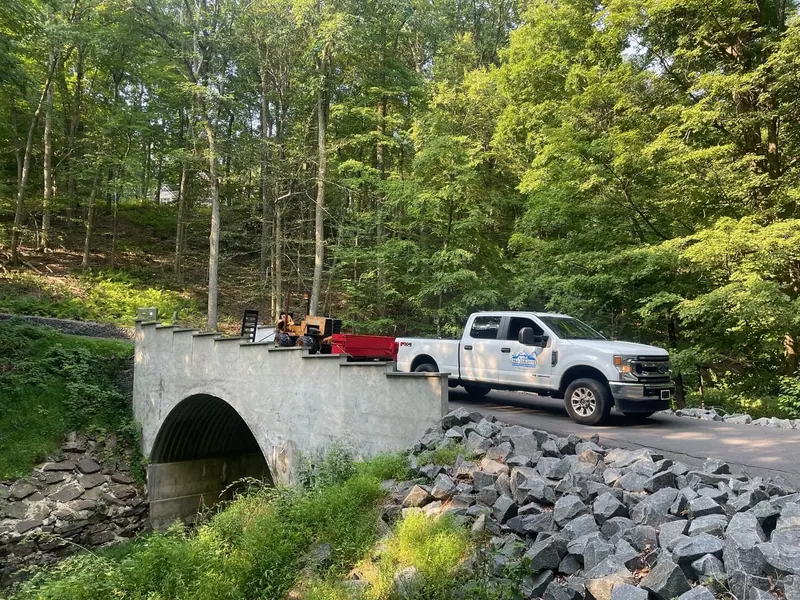
Photos from our jobs
Three steps, no runaround
Call or send the form
Call us at 862-268-2510, or tell us about the job online. Emergencies jump the line.
Free estimates when you know what you want done
We look at the ground, tell you straight what it needs, and give you a fair, upfront price. When we have to find the problem or design the fix (camera inspection, site evaluation, design), that's a paid visit, credited toward the job if you hire us.
We do the work
Markouts and permits handled. We dig, backfill, restore, and walk the finished job with you.


Serving northern & central New Jersey
Water with nowhere to go?
Call 862-268-2510 or send photos through the contact form. We will tell you whether a dry well, a downspout line or a regrade fits.
Call 862-268-2510